I strongly believe in empowering neurodivergent individuals to:
Therapeutic Modalities
How personalized therapy works
Personalized therapy begins with understanding your unique experiences and goals. through tallord
sesslons, we use techniques to address your challenges, foster growth.
Why Choose Therapy
Personalized therapy begins with understanding your unique experiences and goals. through tallord
sesslons, we use techniques to address your challenges, foster growth.
Frequently asked questions
(01) What is mental therapy, and how can it help me?
(02) What if i don’t feel a connection with my therapist?
(03) What should I expect in my first session?
(04) Will therapy be covered by my insurance?
(05) How long soes therapy usually take?
DBT Skills-Based Group Therapy
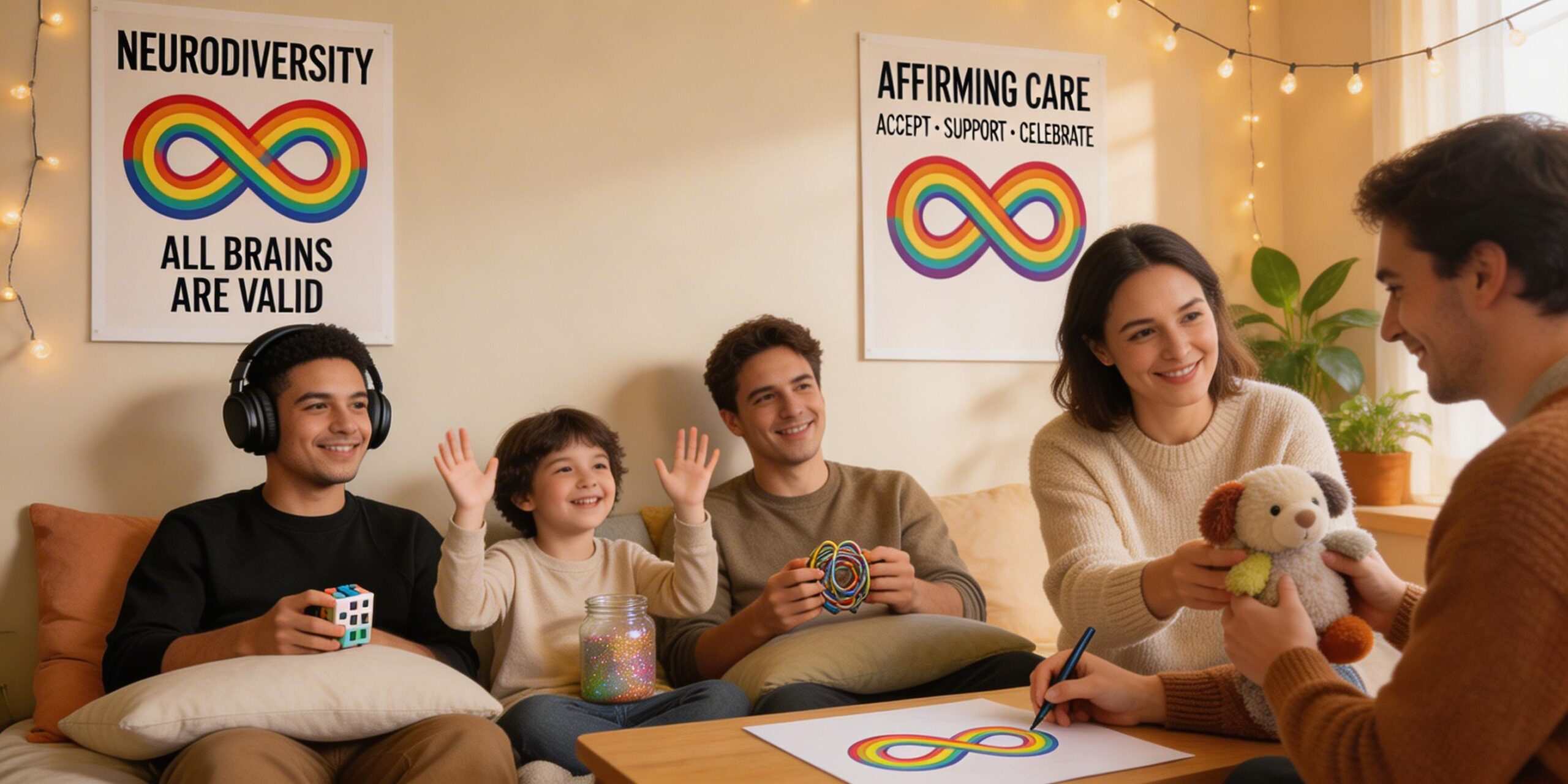
We offer Dialectical Behavior Therapy (DBT) skills groups in a neurodiversity-affirming,strengths-based, and structured learning environment. These groups are designed to be practicaland supportive, helping participants build real-life coping skills while also fostering connection and shared understanding. We currently offer two separate groups: one for adults and one for adolescents (ages 14–17).
Our adult DBT skills group provides a supportive, skills-focused space for individuals seeking practical tools to better manage emotions, stress, and interpersonal challenges. The group is grounded in a neurodiversity-affirming, trauma-informed, and strengths-based approach, and is designed to be accessible for both neurodivergent (including ADHD, Autism, and AuDHD) and neurotypical participants.
Consideration is given to differences in attention, sensory processing, communication styles, and emotional regulation needs. The structure is clear and predictable to reduce cognitive overload while supporting engagement and learning.
The group focuses on the core DBT skill areas of mindfulness, emotion regulation, and distress tolerance, with an additional focus on sensory processing awareness and regulation strategies. This includes understanding sensory overload, identifying individual sensory needs and triggers, and developing personalized strategies to support regulation, grounding, and recovery.Skills are taught in a practical, flexible way, with real-life examples and space to explore how strategies can be adapted to each participant’s cognitive style, sensory profile, and lived experience.The emphasis is on building a personalized toolkit that feels realistic, sustainable,and aligned with individual needs and values.
All sessions are conducted online for accessibility, comfort, and flexibility.
Our adolescent DBT skills group is designed to support teenagers in building emotional regulation skills, strengthening coping strategies, and navigating the challenges of adolescence ina structured and supportive environment. The group is neurodiversity-affirming, trauma-informed, and strengths-based, and is adapted for neurodivergent young people (includingADHD, Autism, and AuDHD) while remaining inclusive of neurotypical teens.
We consider developmental stage, communication preferences, sensory needs, and attention differences to ensure the material is accessible, engaging, and appropriately paced without being overwhelming. The group structure is clear, consistent, and predictable, supporting emotional safety and ease of participation.
The group focuses on the core DBT skill areas of mindfulness, emotion regulation, and distress tolerance, with an additional focus on sensory processing awareness and regulation strategies. This includes helping participants understand sensory overload, identify personal sensory needs and triggers, and develop practical strategies for grounding, calming, and self-regulation in everyday environments such as school, home, and social settings.
Adolescents are supported in developing coping tools that are personalized to their needs and identities, with an emphasis on self-understanding, emotional awareness, and reducing shame around emotional or sensory differences.
All sessions are conducted online, providing a safe, accessible, and comfortable space for participation.